


A few interpretive signs. A short hike. A chance to follow in Meriwether Lewis’ footsteps. That was the plan when Lewis and Clark Trail Alliance member Alisha Hamel and her nephew stopped at Montana’s Alice Creek trailhead. With daylight fading, a decision along the trail would turn an ordinary outing into an experience neither would forget. Here is Alisha’s story—a reminder that along the Lewis and Clark Trail, history isn’t the only thing that can stop you in your tracks.
Stalked by a Mountain Lion
By Alisha Hamel
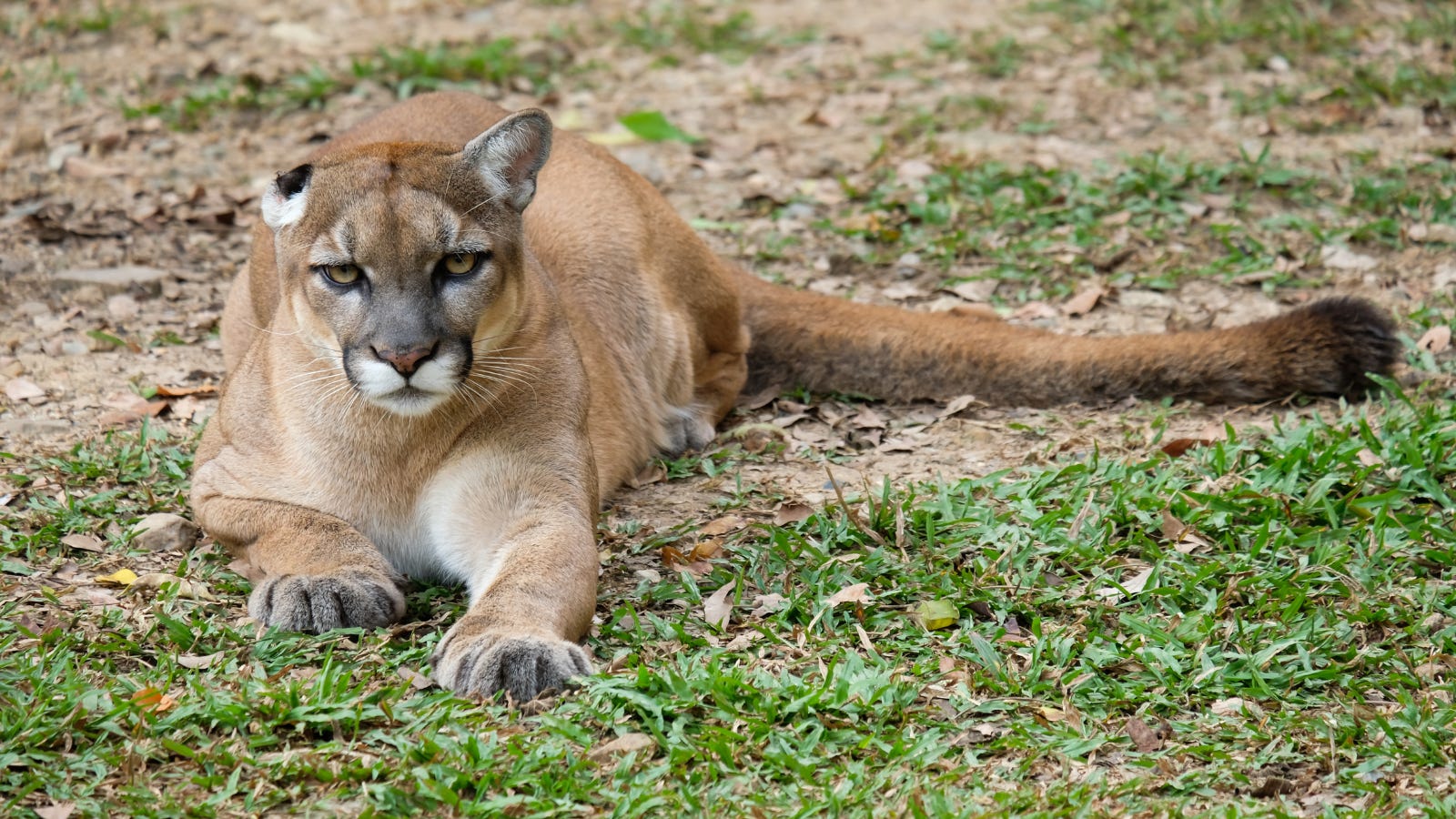
My nephew, Matt Kelley and I were hired in 2025 to inventory and assess all of the road signs for the Portage Route Chapter of the Lewis and Clark Trail Alliance.
I met with chapter members Carol Bronson and Duane Buchi for lunch before we started the inventory. Duane noted that there were some signs at Alice Creek up an eight-mile-long gravel road. He also suggested a beautiful 1.7-mile hike that would take us up to Lewis and Clark Pass.

On Halloween, Oct. 31, 2025, my nephew and I drove to the Alice Creek trailhead and inventoried the three Lewis and Clark signs located there. We then decided to hike the trail to follow in Captain Meriwether Lewis’ footsteps during his return trip in 1806 to find the northernmost point of the Marias River.
It was getting to be twilight.
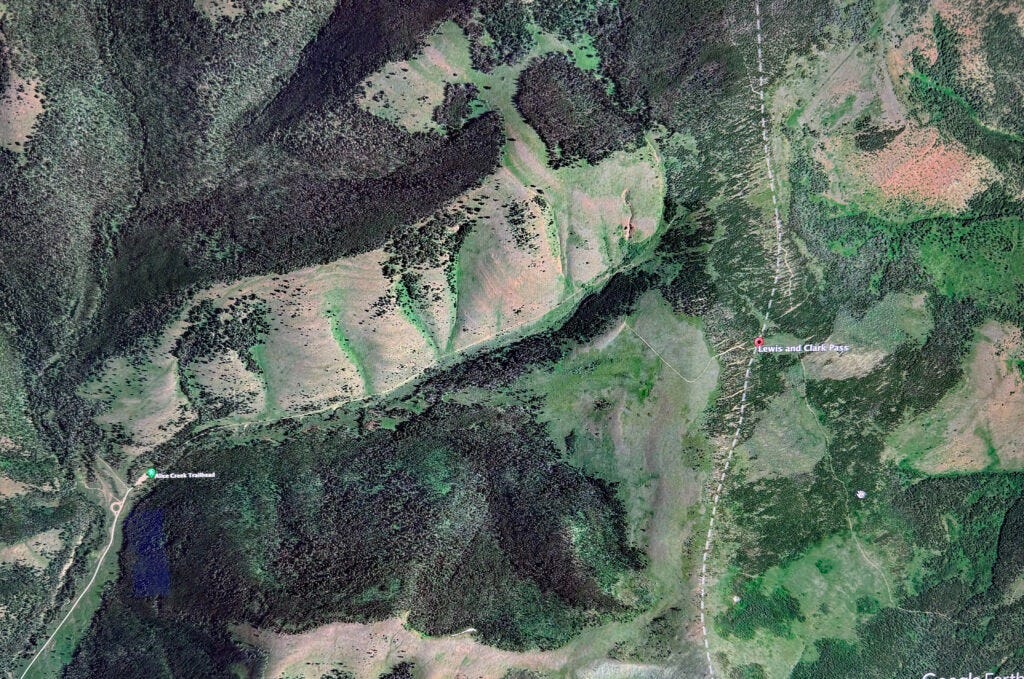
Before we started our hike, we noticed a sign that cautioned us to look out for grizzly bears in the area, so we decided to walk and talk loudly to let the wildlife know that we were hiking up the trail. With the sun disappearing, it was obvious that my nephew (who is 29 years old and runs consistently in Salt Lake City) would be able to make it to the pass and back to the car before dark. I would not.
We discussed having him run to the top, then meet me back at the car. As soon as he was out of sight, an eerie feeling came over me–that had been a bad decision.
“This morning they (Clark’s group) passed a small creek on Stard. At the entrance of which Reubin Fields killed a large Panther. We called the creek after that animal Panther Creek….The Panther which Fields killed measured seven and ½ feet from the nose to the extremity of the tail. It is precisely the same animal common to the western part of our country. Saturday. August 3, 1805, S. 45 degree W”
–Meriwether Lewis. (Along the Jefferson River, near the mouth of present-day Pipestone Creek, in southwestern Montana near Whitehall.)
Being alone on a deserted mountain at twilight was not a good idea, so I decided to stay on the trail and wait for Matt’s return. We had already hiked up at least three quarters of a mile on the trail. If, for some reason, he did not show up at the car, I did not want to have to hoof it all the way back up the trail.
So I waited.
I then decided to hike a bit further up the trail, so that we would meet up earlier. Where the trail crossed Alice Creek was a beautiful, serene spot to stop for my daily shoulder exercises.
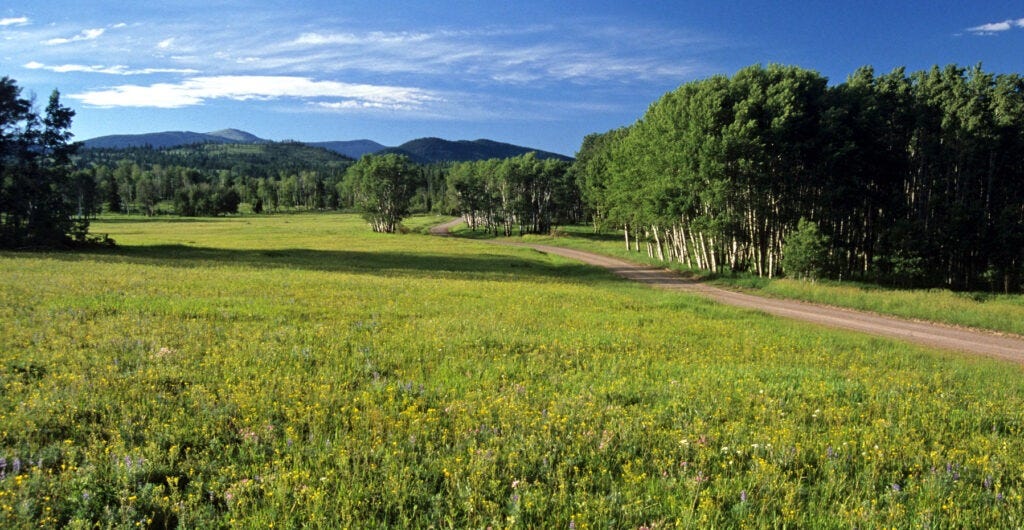
Remembering the grizzly bear warning sign, I stretched my shoulders while constantly checking my surroundings.
After a while, I decided to slowly head back to the car. Surely Matt would catch up to me soon.
I stopped at the end of every straight stretch, looking back to see if he was there yet. I stopped and looked, then hiked, then stopped and looked.
About the third or fourth time of glancing back, my eyes latched onto something crouched on the trail. Then my heart did a somersault–it was a mountain lion, and it was only about 15 to 20 feet behind me on the trail.
“A cougar might be stalking you if you notice: prolonged, direct eye contact, following your movements from a distance, crouching low to the ground, slow, deliberate movements.” –Institute for Environmental Research and Education
I immediately froze, afraid that this was going to be the last day of my life.
There was no way that I could get out of this situation, so I went completely calm.
I stared at my stalker.
The mountain lion looked back at me like I had interrupted its nightly ritual of obtaining dinner. We analyzed each other for close to a minute. Then it laid down on the trail as if patiently waiting for me to decide what time I wanted to die.
A number of thoughts raced through my head while remembering what one was supposed to do when one encountered a mountain lion.
I could not fight it off with a stick, I was above the tree line so there were no sticks available.
I had to get big and get loud, but it was so quiet and peaceful up there.
If this was the end, I had led a good and exciting life. I had two amazing boys. Both they and my husband would be devastated.
I hoped that the lion would not kill me–for both our sakes. If he killed a human, he would also have to be put down.
Again, it’s probably time to get loud.
What a cute kitty…..WHAT!? A cute kitty that was planning to kill me?
I completely forgot that my nephew was up on the mountain with me.
While in this death-defying stare down, I came to the conclusion that I needed to take a photo of it. Just in case he did get the better of me, people would want to know what had happened.
I slowly took out my phone and snapped a photo.
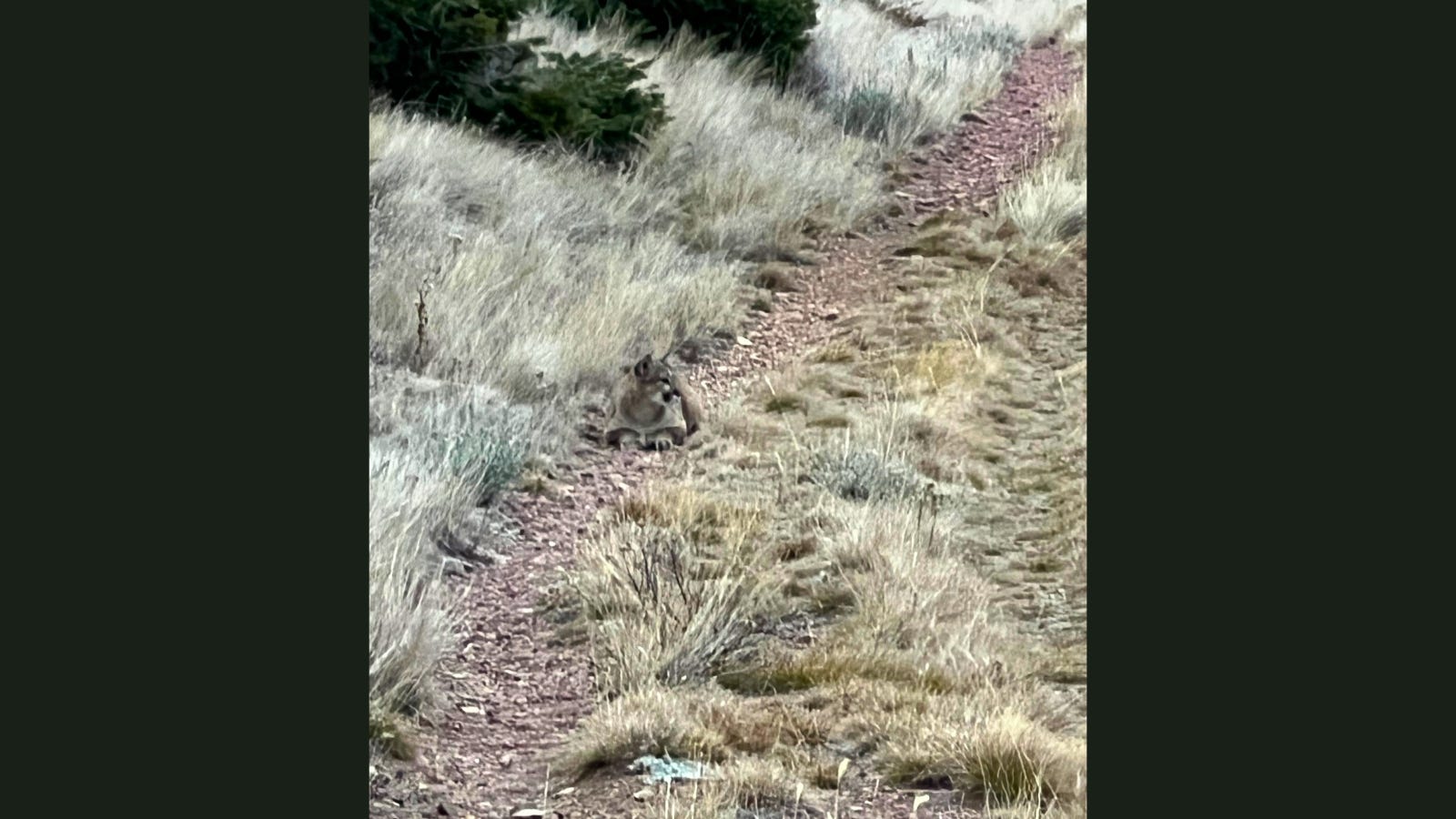
When you look at the photo, you can see how camouflaged the mountain lion is with the background; the same color as the vegetation along the trail.
It was time–past time, really– to get big and get loud.
I then reached down to the bottom of my very soul and pulled a roar out that echoed around the mountain and raised my arms above my head.
The mountain lion stood up, took one step off the trail, and cocked its head as if to say, “Wow, I did not think you had that in you!”
I told myself, “Well that did not work. Better roar again.”
Accessing my inner lion once more, I brought up another blood curdling roar, raising my arms in the air.
At this moment, my nephew rushed over the hill and cried, “Whoop! Whoop!”
Having taken off his black jacket, he was wearing a white sweatshirt. He looked like an angel.
Unbeknownst to me, Matt had heard my first roar, picked up the biggest rock he could find, and sprinted down the trail towards me.
The mountain lion, discovering it was surrounded, bounded away–downhill towards the Alice Creek drainage. I pointed to the cat’s location, and Matt caught a glimpse of its tail as it disappeared. As my nephew caught up to me, we were both very startled, but even more relieved.
Walking down the trail back to the car, I stopped every three steps to see if the mountain lion had decided it could take both of us, but it had vanished, thankfully.
When we made it to the trailhead, another group arrived with their horses to go hunting so we showed them the picture and told the story. They decided to travel the other direction out of the parking lot.
On the drive out of the wilderness area, Matt and I discussed various “what if” scenarios.
If I had gone back to the car as originally planned, the mountain lion could have gotten Matt. While running through the wooded area where the trail crosses Alice Creek, he shared with me that the hair on the back of his neck had risen, as if sensing danger. Had I not been looking back so frequently, the mountain lion could have easily attacked me.
The simple fact was–I never even heard the predator behind me.
I am so glad my nephew was with me on this hike. In reviewing what a person should do if they encounter a mountain lion, I was happy to have had the trail safety knowledge to “get big and loud,” rather than run. In hindsight, taking a photo was probably not the safest thing to do, and not something I recommend.
However, my nephew and I certainly have a true adventure story to tell, as well as a frightening Halloween yarn, and we are happy to be alive to tell it.
Ambush is a Mountain Lion’s Hunting Method
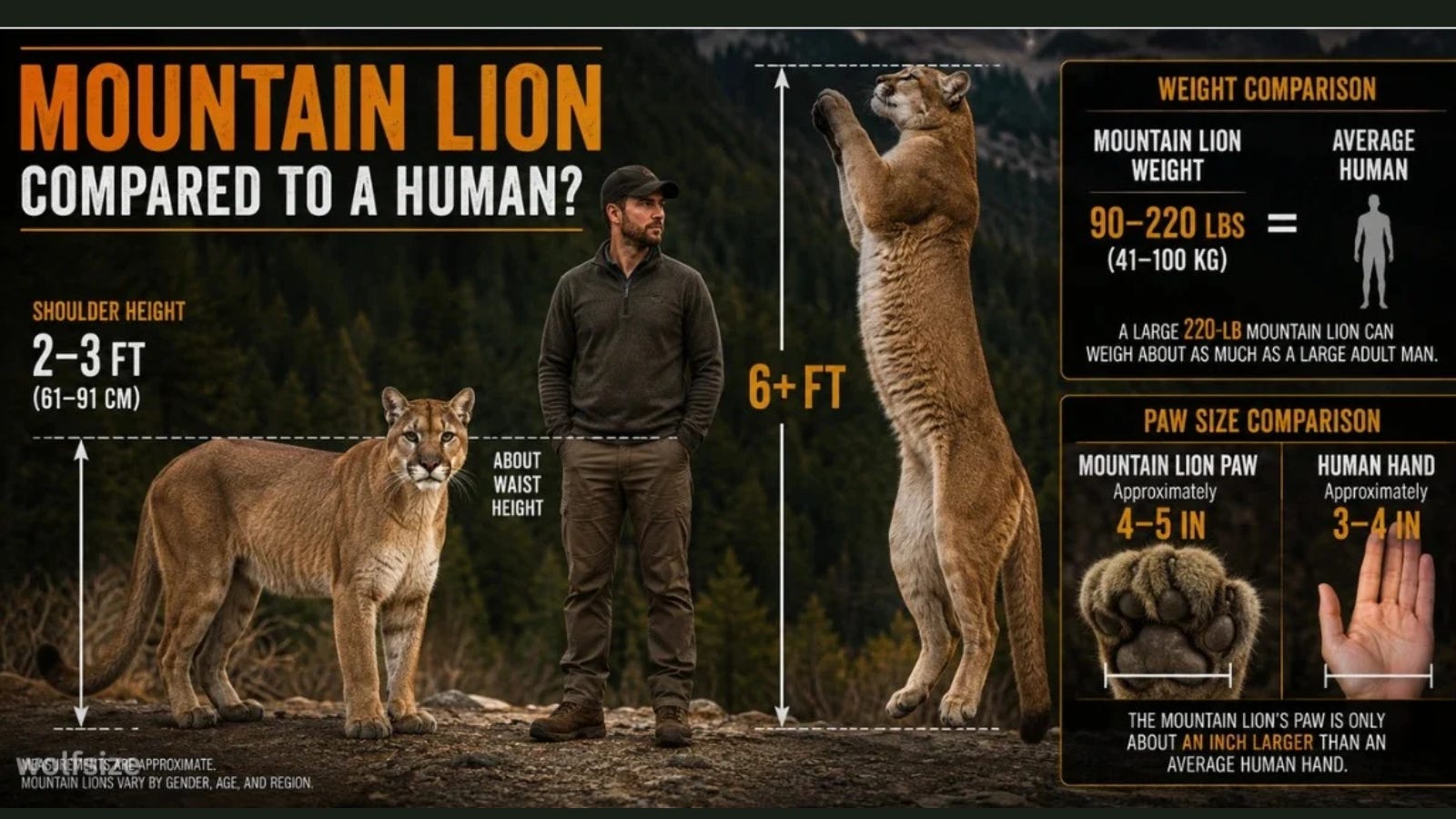
The LCTA is grateful to Alisha for submitting her harrowing trail story. It serves as a good reminder to all of us who enjoy the great outdoors. There are thousands of parks and trails along the Lewis and Clark National Historic Trail in which to commune with nature. Millions of acres of beautiful country can be a remarkable adventure.
Because of the remoteness of many of the places along the trail’s 16 states and 60 tribal nations, here are some guidelines straight from the National Park Service when it comes to mountain lions, also known as cougars, pumas, and what Lewis and Clark referred to as “panthers.”
The mountain lion hunts by ambush: it approaches under cover, gets close, and launches a sudden attack rather than relying on a long chase. Its method combines patience and stealth with a short burst of power.
“Mountain lion sightings are rare and there are few attacks on people. Most of these attacks have been by young lions that have been forced to hunt on their own and are not yet living in established areas. They will key in on easy prey such as pets and small children.” –National Park Service
How the Cougar’s Hunt Typically Unfolds
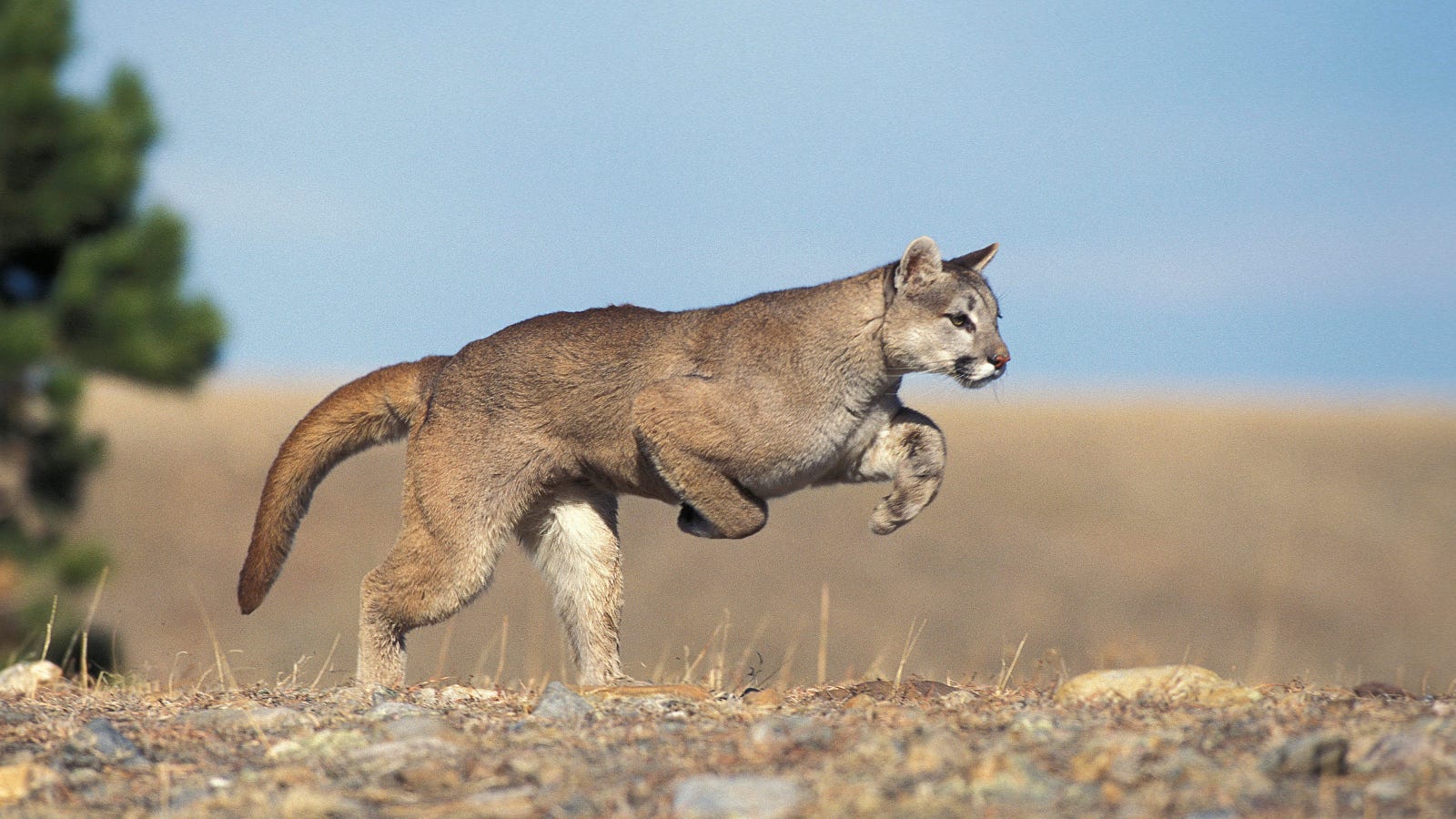
Locate prey and use cover. Deer are a principal food source, although mountain lions also take elk and smaller animals. The lion stalks through trees, brush, boulders, or other terrain that conceals its approach; it may also wait in cover for prey to pass. They commonly hunt at night or around dawn and dusk, but can hunt during daylight.
Close the distance quietly. Rather than charge across a large open area, the lion tries to reach striking distance without being detected–approximately 30 feet or less.
Rush and pounce. The final attack is rapid, often from behind. Against a deer or similar large animal, the lion aims for the back, using its forelimbs and claws to grasp and hold the struggling prey. It can sprint over short distances, but its hunting strategy favors surprise over prolonged pursuit.
Deliver a killing bite. NPS descriptions identify the throat, back of the neck, or base of the skull as targets. Depending on where the bite lands, it can suffocate the prey or break its neck. There is not one identical killing sequence in every encounter.
What Happens After the Cougar Kills
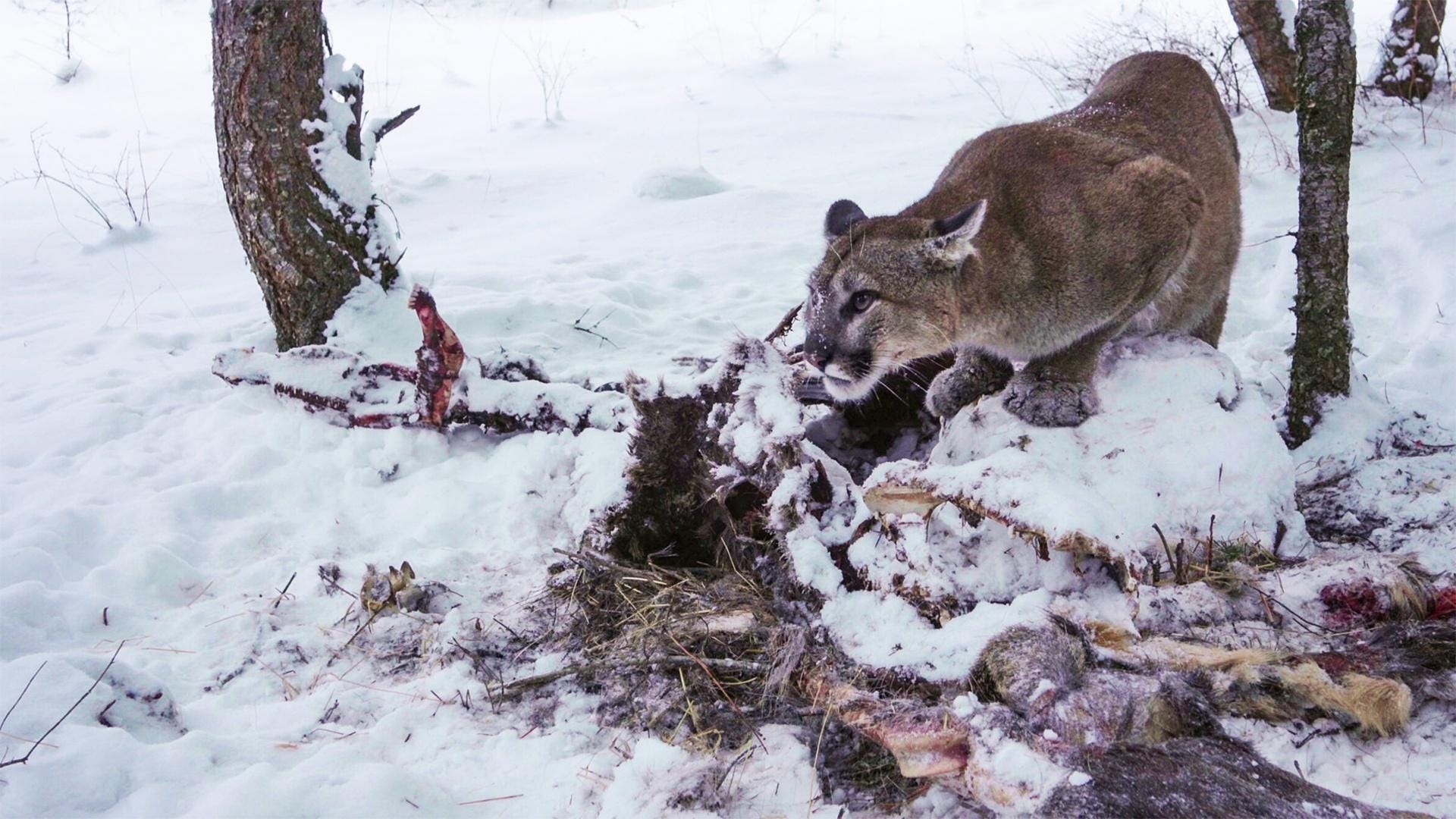
The lion may drag the carcass to a sheltered location, feed, and then cover the remains with leaves, grass, branches, dirt, or snow. This is called caching. It can return to the carcass for additional meals over several days.
That last behavior is precisely what was recorded on the Lewis and Clark Expedition’s May 16, 1805, journal accounts.
Lewis & Clark’s Panther Camp
“in the early part of the day two of our men fired on a panther, a little below our encampment, and wounded it; they informed us that it was very large, had just killed a deer partly devoured it, and in the act of concealing the ballance as they discovered him.” —Meriwether Lewis
Their “coverring up” and “buried the ballance” language describes a cougar caching its kill, rather than burying the entire animal in a dug grave.
The expedition journals record three direct encounters with mountain lions: one animal wounded in May 1805 and two killed–one in August 1805 and another in July 1806. Lewis measured the mountain lion at 7.5 feet from nose to tail.
There are many accounts by various journal keepers in describing “panther” sightings, suspected cougar activity, the animal’s distribution across North America, and the use of its skin.
What to do During a Mountain Lion Encounter
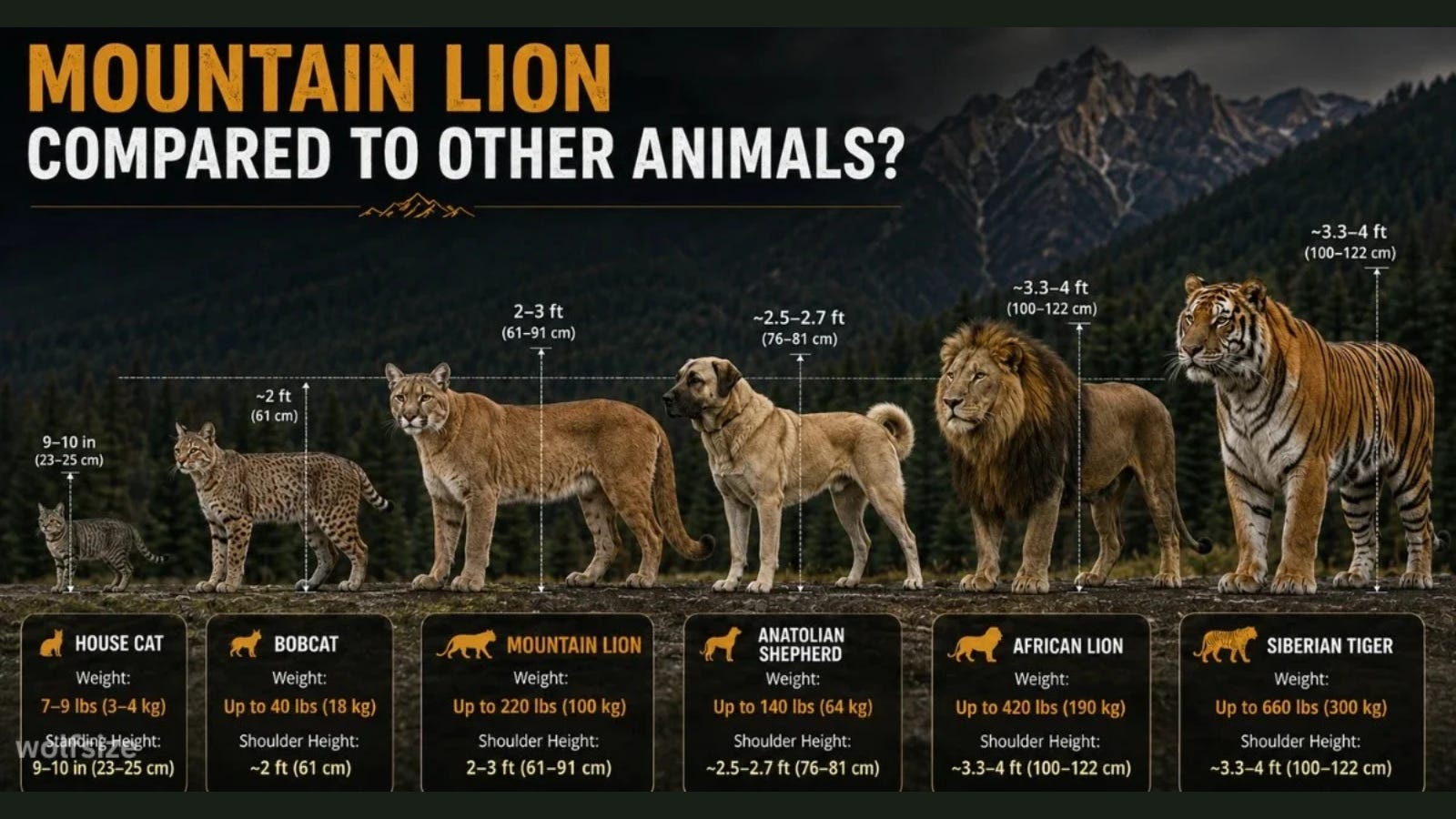
The National Park Service’s central advice is: do not run, stay upright and face the mountain lion, make yourself look large, and back away slowly. If it attacks, fight back. The goal is to convince the animal that you are not prey and may be dangerous to approach.
Do not approach it. Give the lion space and an escape route, particularly if it is feeding or has kittens. Most mountain lions will try to avoid a confrontation.
Do not run or turn your back. Running can trigger its instinct to chase. Stand upright, face the animal, and either hold your ground or slowly back away. Do not crouch or bend over, which can make you resemble a four-legged prey animal.
Keep your group together and secure small children. Bring children close; do not let them run. Pick up small children if possible without crouching, bending over, or turning away from the lion.
Make yourself appear larger. Raise your arms and open your jacket. Speak firmly in a loud voice. If the lion approaches or acts aggressively, wave your arms, shout, and throw rocks or sticks that you can reach without crouching or turning your back.
If attacked, resist aggressively. Use rocks, sticks, a jacket, or whatever is available. Try to remain standing and protect your head and neck. Strike hard, especially at the animal’s head. Do not substitute playing dead for fighting back.
Report the encounter to a park ranger. NPS asks visitors to report mountain-lion sightings and encounters so park staff can assess conditions and warn other visitors as needed.
Precautions Before and During a Hike
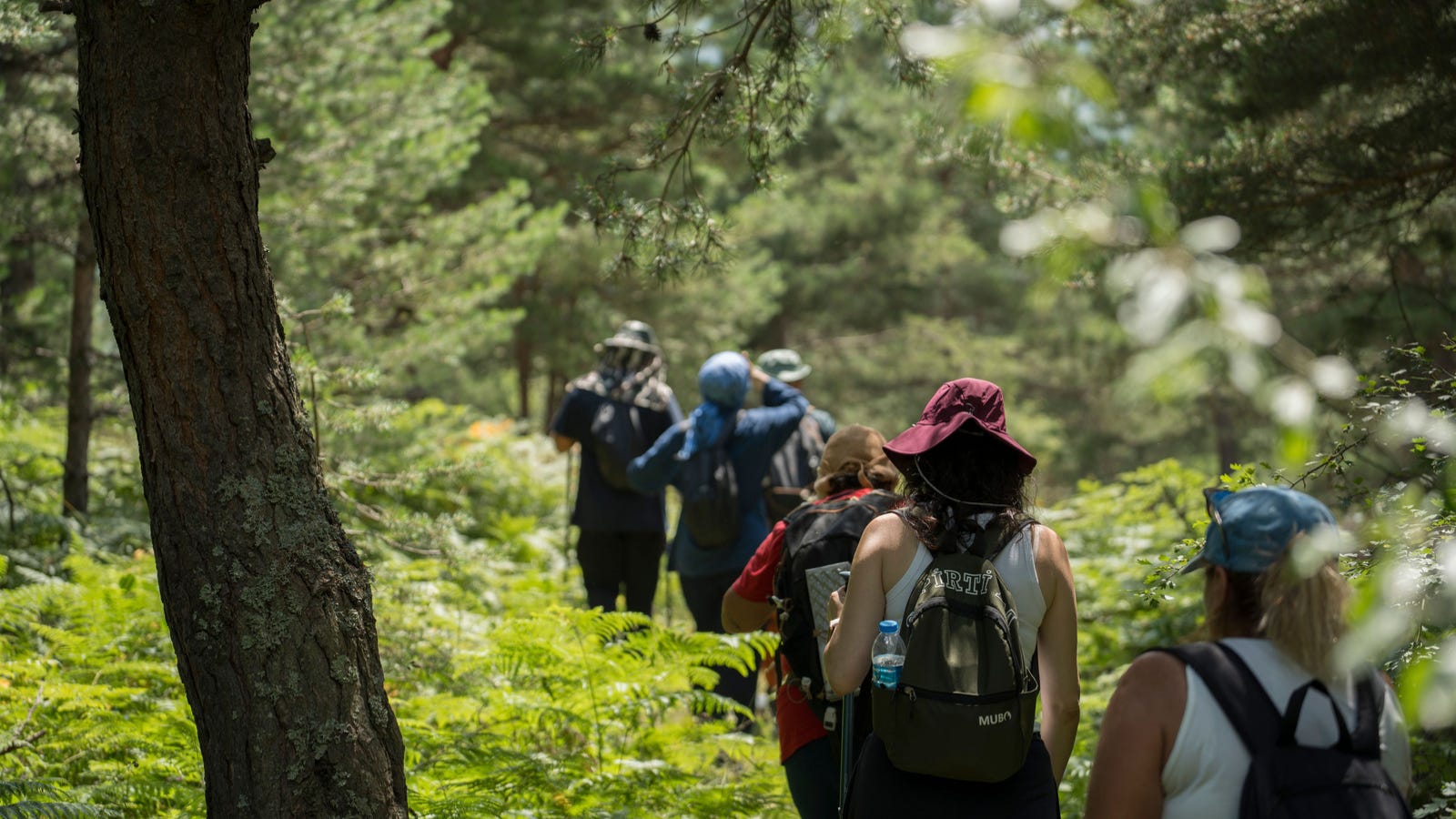
Here are some helpful safety precautions from the National Park Service.
Hike or jog with other people rather than alone. Adults should closely supervise children.
Keep children nearby, not running ahead or lagging behind. NPS particularly cautions against letting children play alone along riverbanks, in heavy vegetation, or at dawn or dusk.
Stay alert to your surroundings, and make noise to avoid surprising a lion.
Keep campsites and picnic areas clean. Food can attract scavenging animals, which in turn may attract mountain lions.
Never approach a feeding lion or kittens.
Maintain distance rather than trying to get closer for a photograph or a better look.
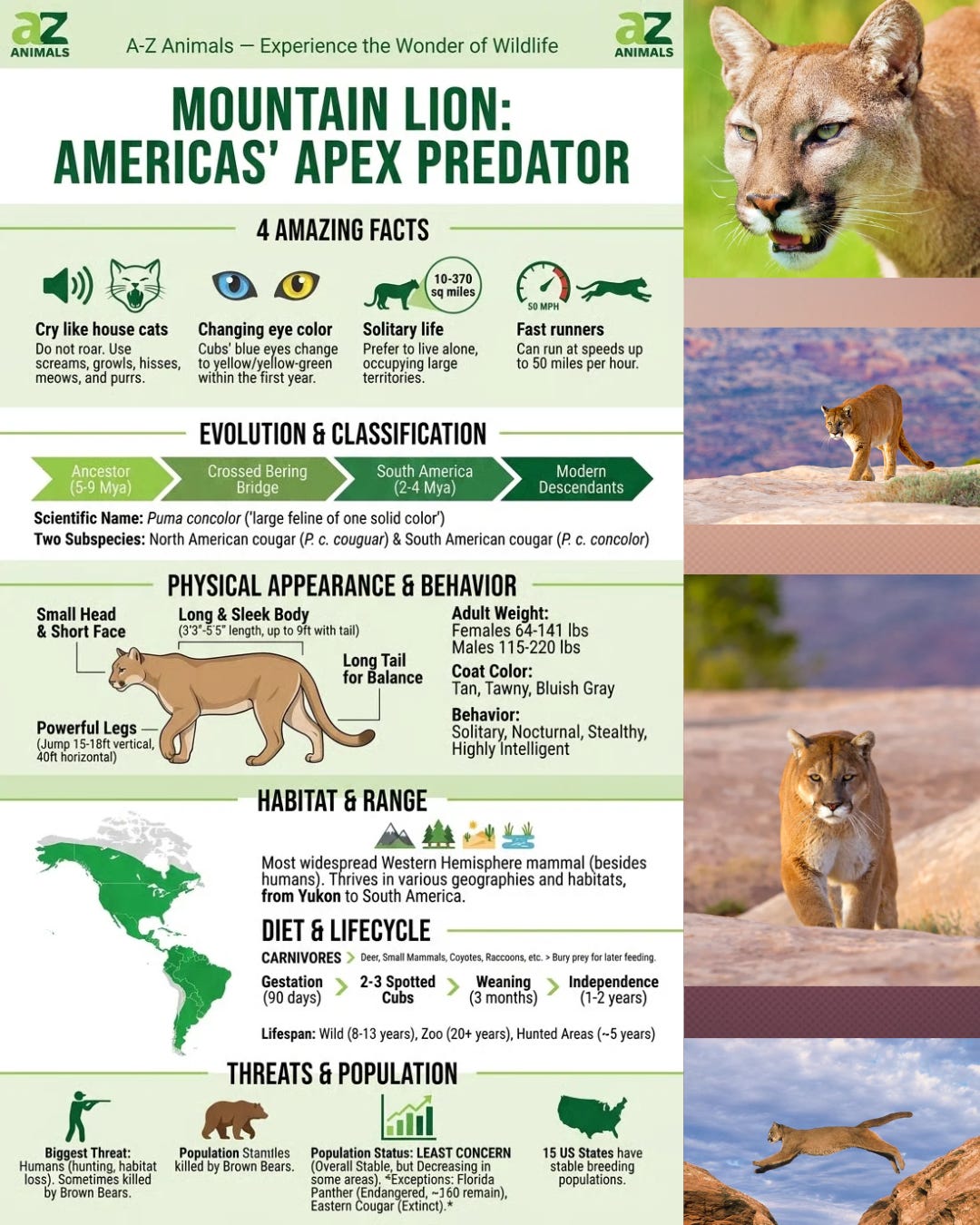
For a Deeper Dive
About the story’s author, Alisha Hamel.
LTC (Ret) Alisha Hamel has a master’s degree in history, is a retired Army historian, current author and loves to teach history to anyone. She worked with the Lewis and Clark Bicentennial from 2003-2007 as the Oregon National Guard Lewis and Clark Special Projects Officer, and remains active with the Lewis & Clark Trail Alliance.
Learn more about traveling the Lewis & Clark Historic Trail?
Or visit Discover Lewis & Clark where you’ll discover 2,400 pages of all things Lewis & Clark curated by the Lewis & Clark Trail Alliance.
The official, online journals of the Lewis & Clark Expedition are the celebrated Nebraska edition of the Lewis and Clark journals, edited by Gary E. Moulton.
National Park Service’s Lewis & Clark National Historic Trail.
The LCTA’s Substack Newsletters, Real Stories of the Lewis & Clark Trail and Undaunted Travel are edited by KS McClure.
That was a pretty intense situation 😳
Now that is a "real" story of the Lewis and Clark Trail!